
What's Changing In Search
For years, operators assumed a parent ASIN could only earn one organic position per query. Even though child ASINs are indexed individually, Amazon typically surfaced a single variant and selected one option to represent the family. That assumption is now breaking.
Across the brands we work with we’re seeing multiple child ASINs from the same parent appear on the same search results page, particularly on high-intent queries. The variants that surface tend to reflect shopper intent in the moment, color, size, configuration, or use case.
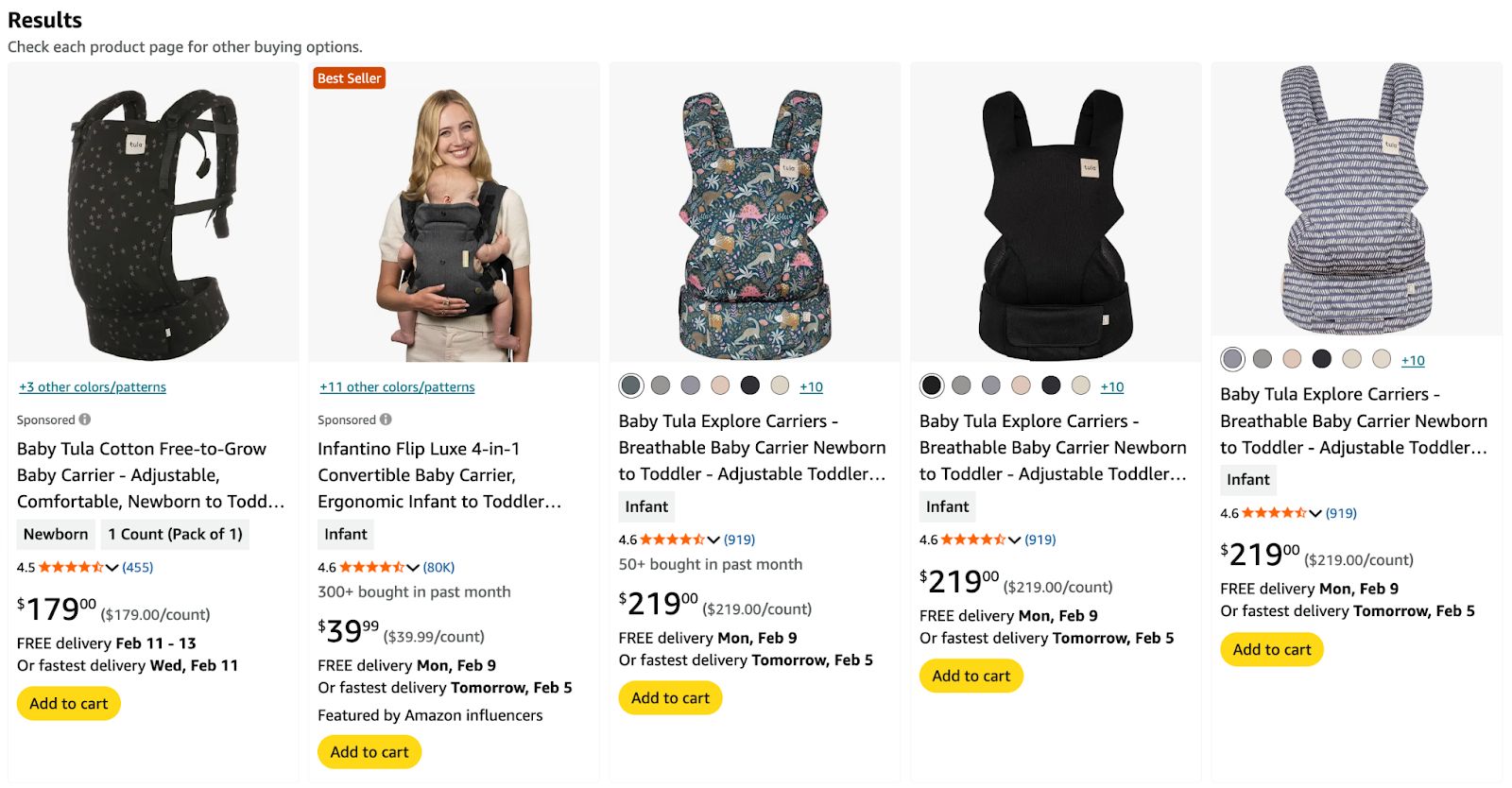
Amazon has tested this behavior before. What’s different now is consistency. This no longer looks experimental. It reflects a shift toward presenting the clearest version of a product family for a given shopper and query, with the SERP becoming more dynamic and focused on faster decisions.
Why Amazon Is Doing This
Variations exist to simplify shopping. They allow customers to compare options in one place and give Amazon flexibility to rank child ASINs independently.
When more than one child fits a query, surfacing them together reduces friction and increases confidence. The same logic shows up in Amazon’s tightening of review sharing across variations, particularly when functional differences affect performance or use. Review aggregation was never meant to blur real differences, and Amazon is becoming more precise about when trust is shared versus separated.
There’s no fixed rulebook, but the goal is consistent: reduce fraud, improve conversion, and protect customer trust. Multi-child surfacing isn’t a tactic, it’s Amazon’s relevance logic made visible at the variant level.
How Visibility Is Changing
This change has real strategic impact. Historically, many brands avoided consolidating variants into clean parent families out of fear that grouping would limit visibility. Fragmentation felt safer.
That logic is weakening. If Amazon is willing to surface multiple children from the same parent, clean parentage can now expand SERP footprint rather than shrink it. Clarity is rewarded. Fragmentation is penalized.
The tradeoff is credibility. As visibility increases, Amazon is raising the bar on trust. When functional differences matter, review equity may no longer be shared. Each child has to earn its own conversion.
Implications For Catalog Structure
Parentage decisions matter more than ever. Variation families built around real, intuitive choices benefit when multiple children surface together. Families built for convenience, or to hide weak variants, tend to break down when everything is visible.
When multiple children appear side by side, weaknesses surface quickly:
- Creative must clearly distinguish variants, not rely on the parent
- Titles and main images have to be accurate on their own
- Pricing and reviews become shared risk across the family
A weak variant can undermine the entire group. Parentage doesn’t just organize the catalog, it determines how the brand holds up under scrutiny.
What Brands Should Do
Review parentage across priority families and ask one question: if two children from this parent showed up side by side, would the choice feel clearer or more confusing? If it’s not clearly clearer, the structure needs work.
From there, focus on execution:
- Treat every child ASIN as if it could surface independently
- Audit whether variants truly deliver the same experience before sharing reviews
- Align paid media to the variants customers actually choose, not legacy winners
- Track SERP behavior directly, not just rank reports
This is not a growth hack. It’s an operational shift toward clarity.
The Bigger Picture
Multi-child surfacing and tighter review logic reflect the same philosophy. Amazon is prioritizing relevance and rewarding clarity, favoring catalogs that mirror how people actually shop.
For brands, the takeaway is simple. Build variation families around real decisions. Treat parentage as a strategic lever, not a cleanup task. Make sure every child in a critical family can perform if Amazon brings it forward. Clean foundations expand surface area. Weak ones get exposed fast.