
Good Creative Shows the Product. Great Creative Helps the Shopper Decide.
Most brands understand the basic Amazon creative requirements. A strong product page needs clear images, helpful copy, A+ content, video where possible, and a Brand Store that gives shoppers a broader view of the catalog.
That is a good start, but it is not enough.
The real job of Amazon creative is to help someone make a decision. A shopper should be able to understand what the product is, who it is for, how it works, what comes with it, why it is different, and why it is worth the price.
That sounds obvious, but a lot of product pages do not actually do it.
A page can have a full image stack and still skip the things that matter, like size, materials, use case compatibility, ingredients, or what's in the box. A+ content can look polished but repeat what the shopper already saw above the fold. A Brand Store can feel on-brand but still make it hard to find the right product.
This is why the standard cannot just be whether the assets are live. The standard has to be whether the page helps the shopper buy with more confidence.
What to do. A main image that uses its white space to stand out in search and leads with the product's key differentiators, so the shopper understands what sets it apart before the click.

What not to do. A duo listing that leaves the supplement facts off the page entirely. The facts exist, but only if the shopper clicks into each product on its own to find them. The page sends the buyer hunting for the one thing they came to check.

Good creative shows the product. Great creative reduces doubt.
Creative Management Connects the Page to the Business
Amazon creative is often treated like a design output. It works better when it is managed as part of the business.
The products getting the most traffic need pages that are ready to convert. The products the brand wants to grow need stronger education and support. New launches need enough context to give shoppers confidence. Hero products need content that matches their importance. The Brand Store should reflect what the brand is selling now, not an old version of what it used to push.
This is where creative management becomes operational. It has to connect to advertising, inventory, promotions, launches, reviews, and catalog strategy.
If reviews show that shoppers are confused about size, fit, usage, or what comes in the box, the page should help answer that. If a product is out of stock or no longer a priority, it should not be sitting in a major Store placement. If a comparison chart includes old products or leaves out important new ones, it is no longer helping the shopper choose.
What to do. A storefront that's cleanly templated and organized, so the catalog is easy to move through, not just nice to look at.
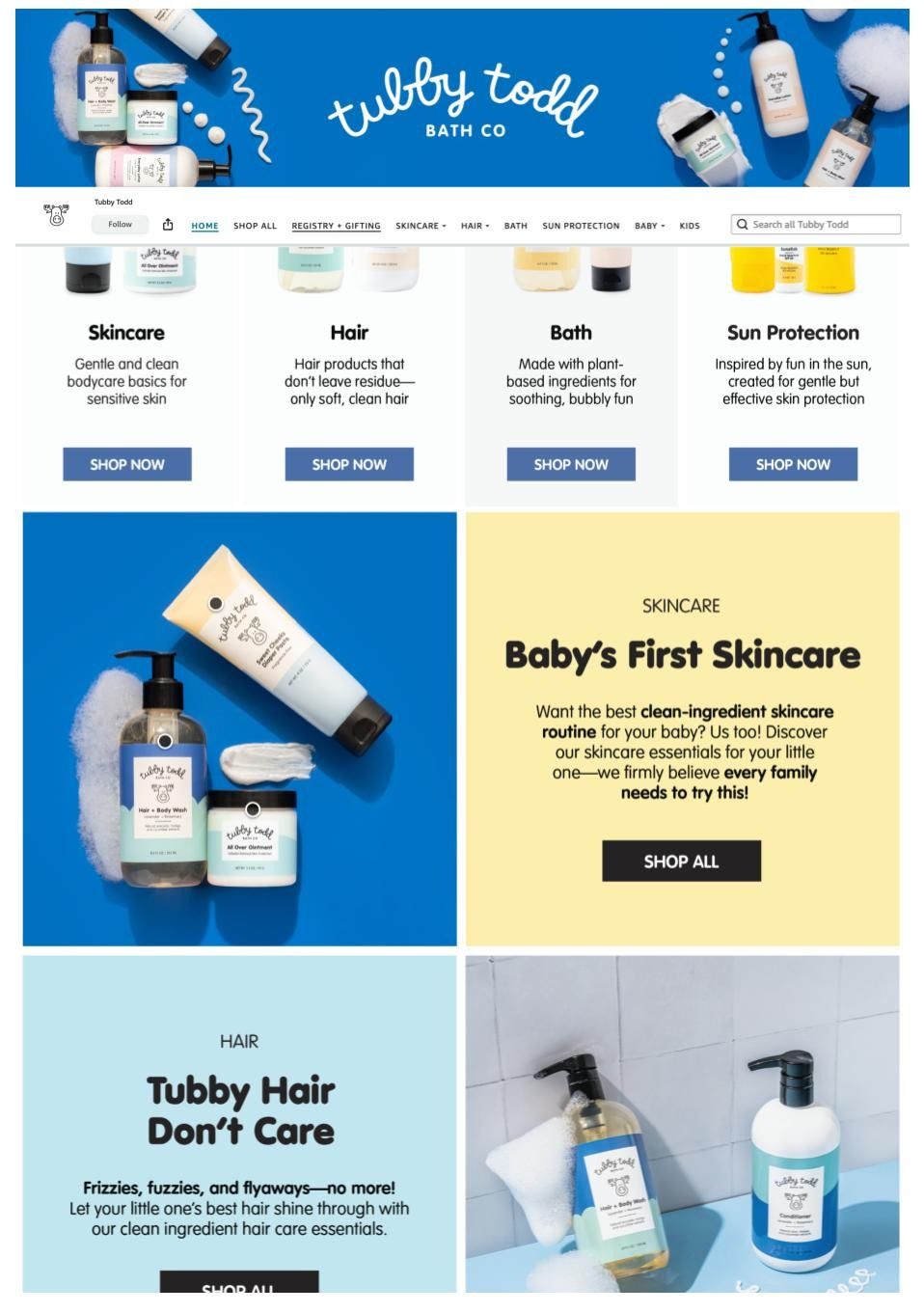
What not to do. A Brand Story that was clearly thrown together. No intentional layout, no separate treatment for desktop and mobile, so it reads awkwardly or breaks depending on where the shopper sees it.

The Evolution of Creative Performance
Creative assets are not "set it and forget it" deliverables. A page that excels at launch can lose its edge within six months, not because the quality was poor, but because the business environment shifted.
Several factors contribute to this decline in relevance:
- Shifts in bestseller priority or catalog assortment.
- New competitive entries or pricing adjustments.
- Customer reviews raising new questions that the current creative doesn't answer.
- Changes in inventory or promotional strategies.
The objective of refreshing content is utility, not novelty. Creative must be managed by someone who understands the intersection of brand identity and business operations, ensuring the page experience continues to meet the shopper's needs over time.
Sometimes the right fix is a full creative refresh. More often, it is smaller work: reordering images, adding a clearer comparison chart, updating A+ content, cleaning up the Brand Store, adding missing product education, or addressing questions that keep showing up in reviews.
This is not glamorous work. It is also where a lot of performance is won or lost.
Better Creative Helps the Whole System Work Harder
Creative isn’t the only thing driving Amazon performance, but it reaches further than just how the page looks.
Clearer product pages can improve conversion. Better conversion can help advertising work more efficiently. Stronger product education can reduce hesitation. Better expectation-setting can reduce avoidable confusion and returns. A cleaner Brand Store can help shoppers find more of the catalog. Stronger launch assets can help new products get traction faster.
That is why Amazon creative should not sit off to the side as a brand exercise. It’s tied directly to how the business performs.
Pretty creative can make a brand look polished. Useful creative helps the business sell.
The strongest Amazon creative does both. It respects the brand, but it also does the practical work of helping someone choose the product.
Prime Day Is a Useful Stress Test
Prime Day is not the reason this matters, but it is a good reminder.
Big traffic moments put more pressure on the page. If the page is clear, current, and useful, the added traffic has a better chance of converting. If the page is confusing, outdated, repetitive, or thin, more traffic exposes the problem faster.
That is why brands should not treat major shopping moments as only a media and discounting exercise. Budget matters. Discounts matter. Inventory matters. But the page still has to do its job.
A strong Prime Day plan should ask where the traffic is going and whether that page is ready for it.
That same standard applies all year.
The Real Standard
The standard is not whether the brand has images, A+ content, video, and a Brand Store. Those are the basics.
The better standard is whether the creative helps shoppers understand the product, answer the right questions, compare options, find the right item, and feel confident enough to buy.
Good Amazon creative fills the page. Great Amazon creative management helps the page perform.
That is the difference between checking the box and managing creative like part of the business.