
What Shoppable Collections Actually Was
When utilized, the Shoppable Collections module replaced the existing Brand Story module on the product detail page. They both are below-the-fold branded content sections that sit separately from A+ Content, usually right above it.
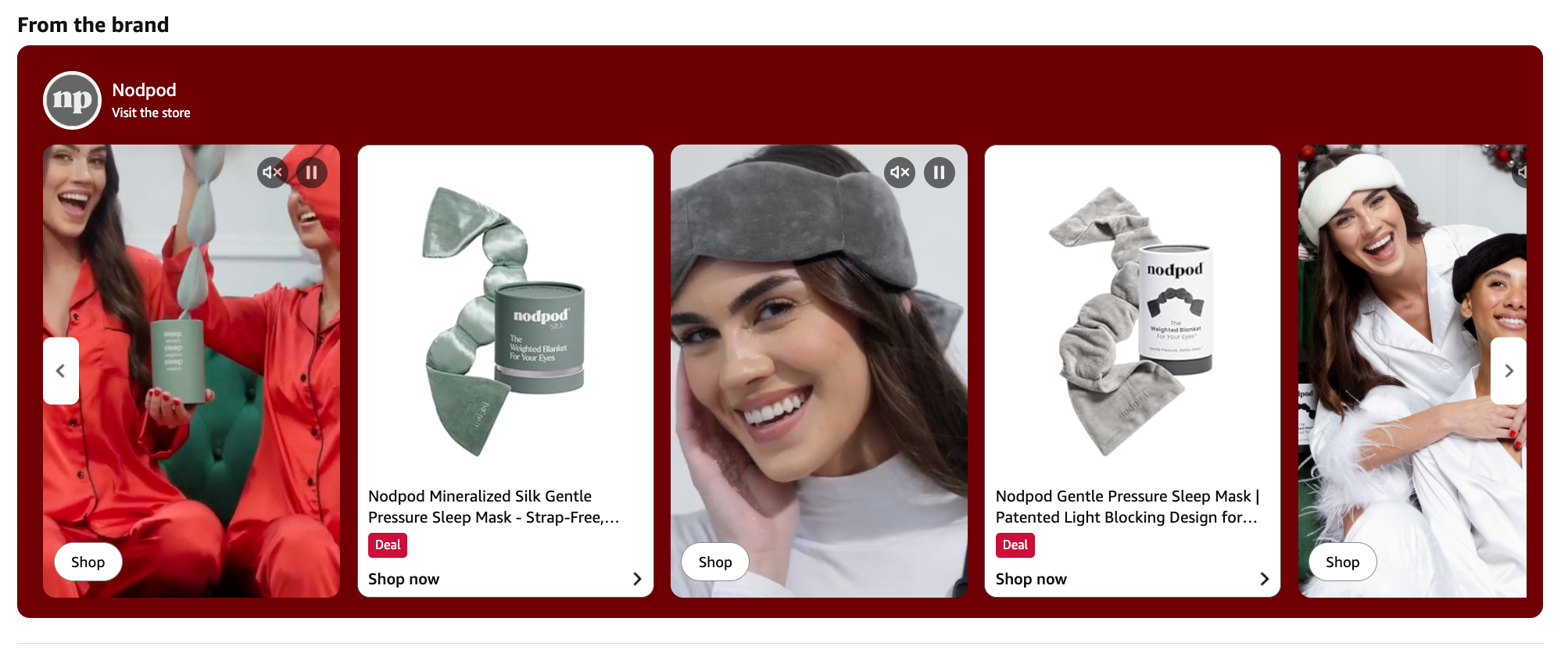
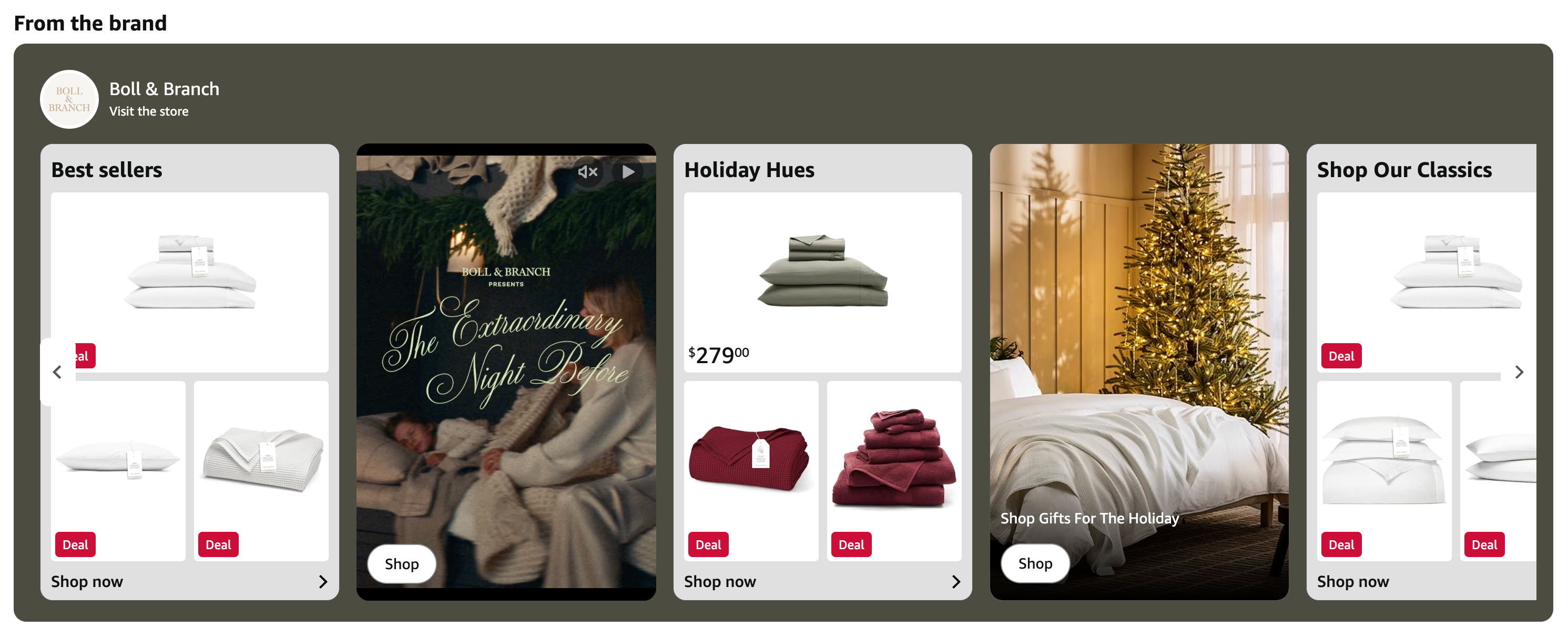
Instead of a static carousel with some optional product links, Shoppable Collections allowed brands to create themed product groupings with tagged ASINs, looping video, and links to their Brand Storefront. You could organize products around things like “Everyday Essentials,” “Starter Set,” or “Good, Better, Best” instead of simply referencing adjacent SKUs.
It was a more structured way to present your assortment within a space that already existed on the PDP. It didn’t expand branded real estate, it increased the merchandising functionality inside it.
Here are two examples:
What It Didn't Change
It’s relevant to note that brands were already able to cross sell on the PDP before Shoppable Collections. Comparison charts, Premium A+ shoppable images, Brand Story ASIN modules, “From the brand” carousels, and even image-based bundles inside A+ all surfaced related products. Most of those simply sent customers to another PDP.
Collections made that merchandising cleaner and more intentional, but it did not change the basic shopping pattern. Customers still landed on one product page and evaluated that product first. The PDP is built for decision making, not browsing your full catalog.
At its core, Collections was added functionality, not a structural shift.
Why Amazon Likely Ended It So Fast
The beta lasted less than six months. For something living on the PDP, that is a short runway.
The PDP is where conversion happens. Any module that takes up space there has to improve performance in a measurable way across a wide range of brands. If the improvement is small, inconsistent, or dependent on strong execution, it does not last.
Some brands likely used Collections well. Many probably did not, or not at all. Amazon builds for scale. If the average implementation did not clearly outperform the simpler Brand Story format, rolling it back is the logical move.
It’s not “another Amazon beta feature failure” that should be overreacted to. It’s just how the platform operates. They launch and iterate with the best of ‘em.
What Happens On February 27
Amazon has stated that on February 27, 2026:
- Shoppable Collections will be removed from PDPs
- The module will no longer appear in A+ Content Manager
- The last saved version of Brand Story will automatically display
That last point is where sellers and operators need to pay attention.
Whatever version of Brand Story you had before Collections replaced it is what will reappear. If that content has not been reviewed recently, you may be reverting to outdated messaging, discontinued products, or stale creative.
Don’t assume it’s current. Log in and check it.
What To Do Now
Between now and February 27:
- Confirm what your last saved Brand story contains
- Update it with current positioning and active SKUs
- Move any important cross sell logic into A+ comparison charts or Premium A+ modules
- Review your Storefront to ensure assortment grouping still makes sense
If Collections was carrying your below-the-fold merchandising strategy, that logic now needs to live somewhere else.
What This Actually Signals
There are three practical takeaways.
- PDP real estate has to earn its keep. If a module lives on the product detail page, it needs to improve conversion, increase basket size or lift AOV across a broad base of sellers. Looking better or feeling more “branded” is not enough.
- This is refinement, not retreat. Amazon is not backing away from brand storytelling. The opposite actually. They explicitly said that the most successful elements of Collections will be folded back into Brand Story. That tells us the experiment produced useful learnings, even if the expanded format did not stick.
- Assortment strategy still matters. The presence or absence of a specific module does not change that. Brands that organize products in clear systems, use cases and ladders consistently outperform those that treat each SKU as an island.
The Bigger Category Ownership Question
Differentiation on Amazon is still hard. Every listing operates within the same structural constraints. The layout is templated. The buying decision is compressed into price, reviews, imagery, and clarity.
Context still matters. Internal product logic still drives cross sell. The question has always been how much of that logic Amazon is willing to surface directly on the PDP.
Whether the module is called Shoppable Collections or Brand Story, the brands that win tend to:
- Build clear assortment architecture instead of disconnected listings
- Organize products around real customer use cases
- Design Brand Storefronts that reinforce how products fit together
- Treat below-the-fold PDP content as something that supports conversion, not just fills space
Amazon optimizes for transactions. When a brand-facing tool survives long term, it is because it clearly helps shoppers buy more confidently or buy more product.
Shoppable Collections did not survive in its expanded form. That is the signal.